
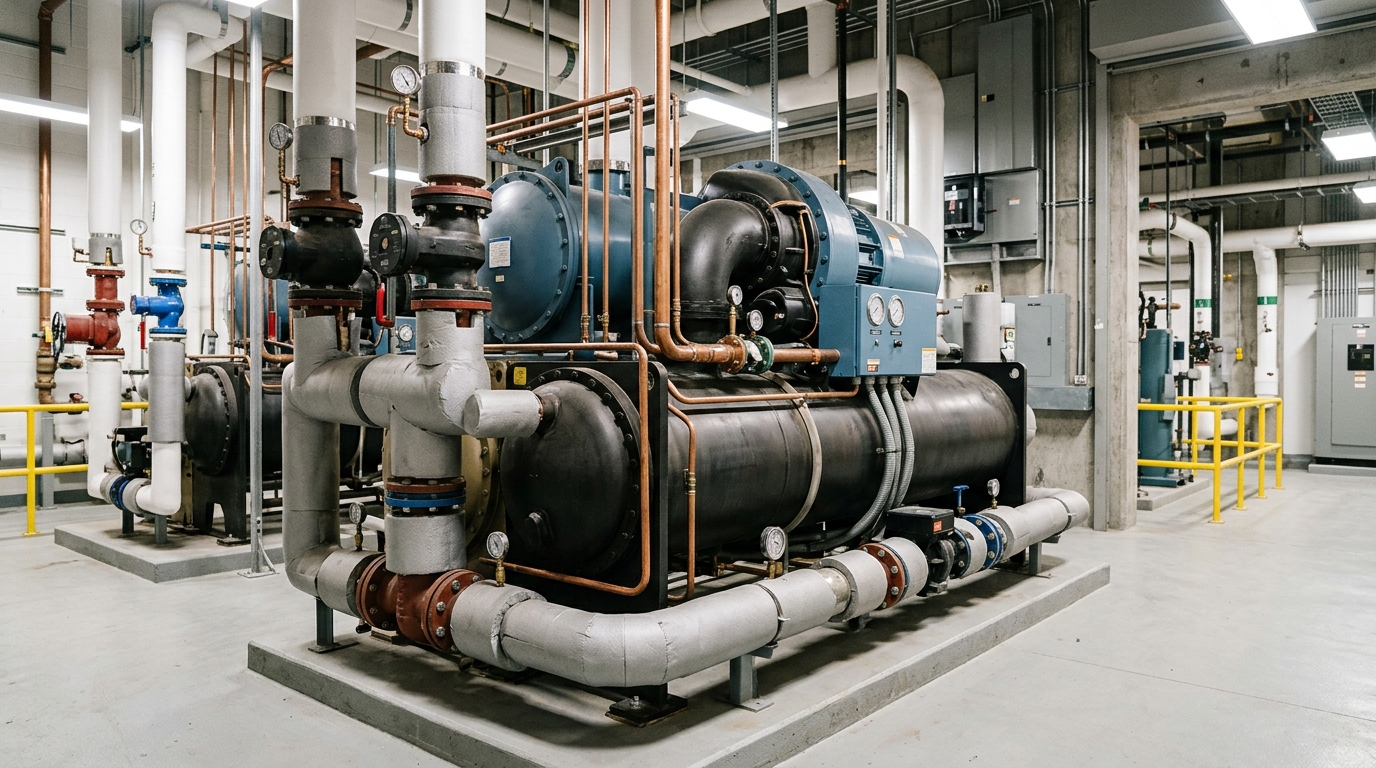
For facility managers and building owners across the Greater Toronto Area, the reliable performance of the HVAC system is non-negotiable. At the heart of most large-scale cooling systems is a critical piece of equipment: the chiller. Understanding how these powerful systems work, what can go wrong, and how to maintain them is essential for ensuring occupant comfort, managing operational costs, and protecting a significant capital investment. This guide covers the essentials of commercial chiller systems and why professional service is key to dependable building cooling.
How Do Commercial Chillers Cool Your Building?
A chiller works by using a refrigeration cycle to remove heat from a liquid, typically water or a water/glycol solution. This chilled liquid is then circulated through pipes to air handling units (AHUs) or fan coil units located throughout the building. As air from the building passes over the coils in these units, heat is transferred from the air to the chilled liquid. The now-warmed liquid returns to the chiller to have the heat removed, and the cycle continues. This process provides the powerful, consistent cooling required for large commercial, industrial, and institutional facilities.
Common Chiller Problems and Reduced Cooling Performance
Even the most robust commercial chillers can experience issues that lead to reduced cooling performance and increased energy consumption. Facility managers should be aware of several common problems:
- Refrigerant Leaks: Low refrigerant levels significantly impact the chiller’s ability to absorb heat, forcing the system to work harder and less efficiently.
- Fouled Condenser and Evaporator Tubes: Over time, mineral scale, sludge, and biological growth can build up inside the chiller’s tubes, acting as an insulator and preventing proper heat transfer.
- Compressor Failure: The compressor is the engine of the chiller. Electrical issues, lubrication problems, or general wear can lead to a costly breakdown and a complete loss of cooling.
- Sensor and Control Malfunctions: Inaccurate readings from sensors can cause the chiller to operate erratically, leading to poor performance and wasted energy.
Energy Efficiency, Maintenance, and Equipment Lifespan
A chiller is one of the largest energy consumers in a commercial building. Therefore, maintaining its energy efficiency is crucial for controlling utility costs. Reduced efficiency is a direct symptom of underlying problems, such as those listed above. The single most effective strategy for ensuring both efficiency and a long equipment lifespan—often 20 years or more—is a proactive, preventative maintenance plan.
Regular maintenance from a qualified HVAC provider like A-Plus Quality goes beyond simple check-ups. It involves detailed inspections, cleaning of coils and tubes, oil and refrigerant analysis, electrical testing, and control calibration. This professional attention helps catch minor issues before they escalate into major, expensive repairs and ensures your commercial chillers operate at peak efficiency, extending their service life and providing reliable cooling season after season.
The Importance of Professional Chiller Service
Commercial chiller systems are complex and require specialized knowledge and tools for proper service and repair. Attempting in-house repairs without certified training can lead to further damage, safety risks, and voided warranties. When your building’s cooling is on the line, trusting professionals is essential. A dedicated HVAC partner can help you manage maintenance schedules, diagnose complex problems accurately, and provide expert guidance on major repair or replacement decisions.
Is your building’s chiller system prepared to handle the demands of a GTA summer? For expert commercial chiller service, preventative maintenance, or urgent repairs, trust the experienced team at A-Plus Quality. Contact us today to ensure your cooling system is efficient, reliable, and ready to perform.