
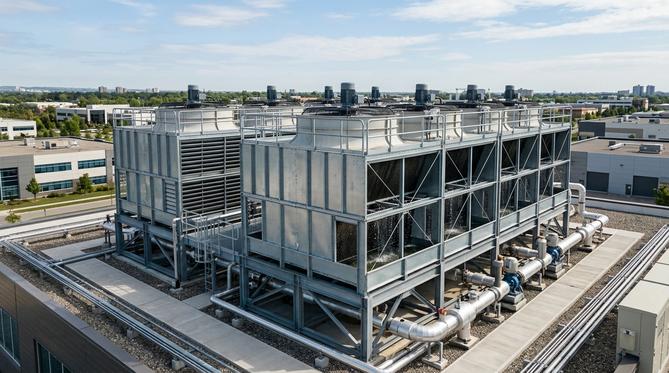
The Critical Role of Cooling Towers in Commercial Buildings
For facility managers and building owners in the Greater Toronto Area, maintaining a comfortable indoor environment is a top priority. While chillers and air handlers often get the credit, the unsung heroes of many large-scale HVAC systems are the cooling towers. These essential pieces of equipment are responsible for rejecting waste heat from the building, making it possible for the entire cooling system to operate efficiently. Without a properly functioning cooling tower, a building’s water-cooled chiller system cannot disperse heat, leading to reduced cooling capacity, higher energy consumption, and potential system failure.
How Cooling Towers Work and Why Efficiency Matters
Cooling towers use a process called evaporative cooling to lower the temperature of water circulating through the HVAC system. Warm water from the chiller is pumped to the top of the tower and distributed over a material called “fill,” which increases the water’s surface area. A large fan draws air through the fill, causing a small portion of the water to evaporate. This evaporation process removes a significant amount of heat from the remaining water, which is then collected in a basin and pumped back to the chiller to absorb more building heat. The efficiency of your cooling towers directly impacts your operational costs. An inefficient tower forces the chiller to work harder, consuming more electricity and driving up utility bills.
Common Operational Problems and Maintenance Requirements
Due to their constant exposure to water and outdoor elements, cooling towers are susceptible to several common problems that can hinder performance:
- Scale Buildup: As water evaporates, dissolved minerals like calcium and magnesium are left behind, forming a hard scale on heat transfer surfaces. Scale acts as an insulator, reducing efficiency.
- Corrosion: The combination of water, air, and chemicals can lead to the corrosion of metal components, weakening the tower’s structure and causing leaks.
- Biological Growth: The warm, wet environment is an ideal breeding ground for algae, slime, and dangerous bacteria like Legionella. This growth can clog nozzles and pipes, impede airflow, and pose a health risk.
Effective water management, including chemical treatment and controlling water bleed-off (or blowdown), is crucial for preventing these issues. Regular maintenance should include cleaning the basin, inspecting the fan and motor, checking belts for proper tension, and ensuring the fill material is clean and intact.
Warning Signs Your Cooling Tower Needs Professional Service
Proactive inspection is key, but you should also watch for tell-tale signs that your cooling tower requires immediate attention. Ignoring these warnings can lead to more extensive and costly repairs. Be on the lookout for:
- Unusual noises or vibrations from the fan or motor.
- Visible water leaks from the tower casing or pipes.
- A noticeable decrease in the building’s cooling performance.
- Unexpected spikes in energy or water bills.
- Visible algae, slime, or excessive scale buildup.
- Clogged or unevenly spraying water nozzles.
Trust the Experts for Reliable Cooling Tower Maintenance
Maintaining commercial cooling towers is a complex task that requires specialized expertise. Professional technicians understand the intricate balance of mechanical operation and water chemistry needed for optimal performance and safety. For businesses across the GTA, having a trusted HVAC partner is essential. The team at A-Plus Quality has the experience to perform comprehensive inspections, diagnose underlying problems, and conduct thorough maintenance to keep your system running reliably.
Don’t let a neglected cooling tower compromise your entire building’s comfort and efficiency. If you’ve noticed any warning signs or want to establish a preventative maintenance plan, contact A-Plus Quality today for professional cooling tower service and support.