
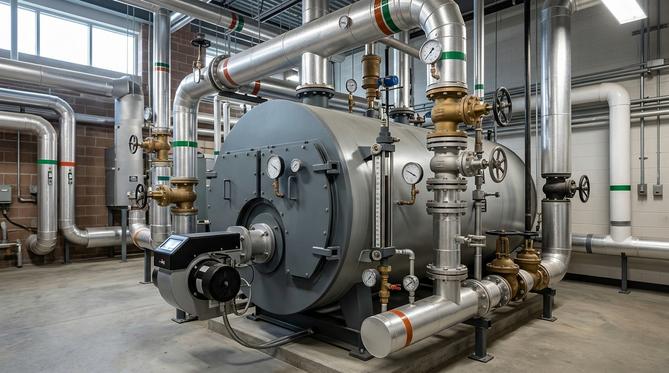
For many homeowners in the Greater Toronto Area, especially those in older, historic homes, the gentle hiss and radiant warmth from radiators are familiar winter sounds. These systems are powered by one of the oldest and most reliable heating technologies: steam boilers. While incredibly durable, these systems have unique operational characteristics and maintenance needs. Understanding how your steam boiler works and recognizing warning signs can help you keep it running safely and efficiently for years.
How Steam Boilers Generate and Distribute Heat
The concept behind a steam boiler is straightforward. A large tank of water is heated by a gas or oil burner until it reaches its boiling point, creating steam. This steam, being lighter than air, naturally rises through a network of pipes to radiators located throughout your home. Inside the radiator, the steam releases its thermal energy, warming the metal fins and, in turn, the room. As it cools, the steam condenses back into water (condensate), which then flows back to the boiler through a return pipe to be reheated, completing the cycle.
Common Steam Boiler Problems and Warning Signs
While robust, steam boilers are not immune to problems. Being aware of common issues can help you identify when professional service is needed.
- Pressure Concerns: Residential steam systems are designed to operate at very low pressure (typically below 2 PSI). If the pressure is too high, it can be dangerous. If it’s too low, you may not get enough heat. A faulty pressuretrol (the device that regulates pressure) or a clogged pigtail pipe can cause these issues.
- Unusual Noises: Loud banging or hammering noises, often called a “water hammer,” usually indicate that water is trapped in the steam pipes or that pipes are improperly pitched. Gurgling sounds can also point to issues with water returning to the boiler.
- Water Leaks: Any visible water leaking from the boiler, pipes, or radiator valves is a clear sign of a problem. This could be due to a failed seal, a cracked pipe, or a corroded tank.
- Low Water Levels: The boiler must have the correct amount of water to operate safely. The sight glass on the side of the boiler shows the water level. If it drops too low, the automatic water feeder should add more. If this system fails, the low-water cutoff switch should shut the boiler down to prevent serious damage.
Efficiency and Maintenance Requirements
A well-maintained steam boiler can be a very effective heat source. However, neglect can lead to inefficiency and costly breakdowns. Regular maintenance is key to keeping your system in top shape. While a homeowner can monitor the sight glass, professional maintenance is crucial for complex tasks like flushing sediment from the boiler, checking safety valves, cleaning the burner, and ensuring pipes are properly pitched for condensate return.
For comprehensive care of your steam heating system, it’s best to rely on experienced professionals. The team at A-Plus Quality has deep expertise in servicing the unique needs of steam boilers, ensuring they operate at peak performance and safety.
The Importance of Professional Boiler Service
Due to the pressures and high temperatures involved, working on a steam boiler can be dangerous without specialized knowledge. An annual inspection by a qualified technician is essential. A professional can spot subtle signs of corrosion, test critical safety components like the pressure relief valve and low-water cutoff, and perform a thorough cleaning that enhances both efficiency and system longevity.
If your radiators are cold, your boiler is making alarming noises, or you see any signs of a leak, it’s time to call for professional help. Attempting a DIY repair can often lead to more significant damage or create unsafe operating conditions.
For reliable steam boiler service in the GTA, trust the experts. Contact A-Plus Quality today for professional steam boiler repair, maintenance, and installation to ensure your home stays warm and safe all winter long.